
insulated glass line double glazing production IGU manufacturing line From CARE Machinery
Products Description
Product Overview
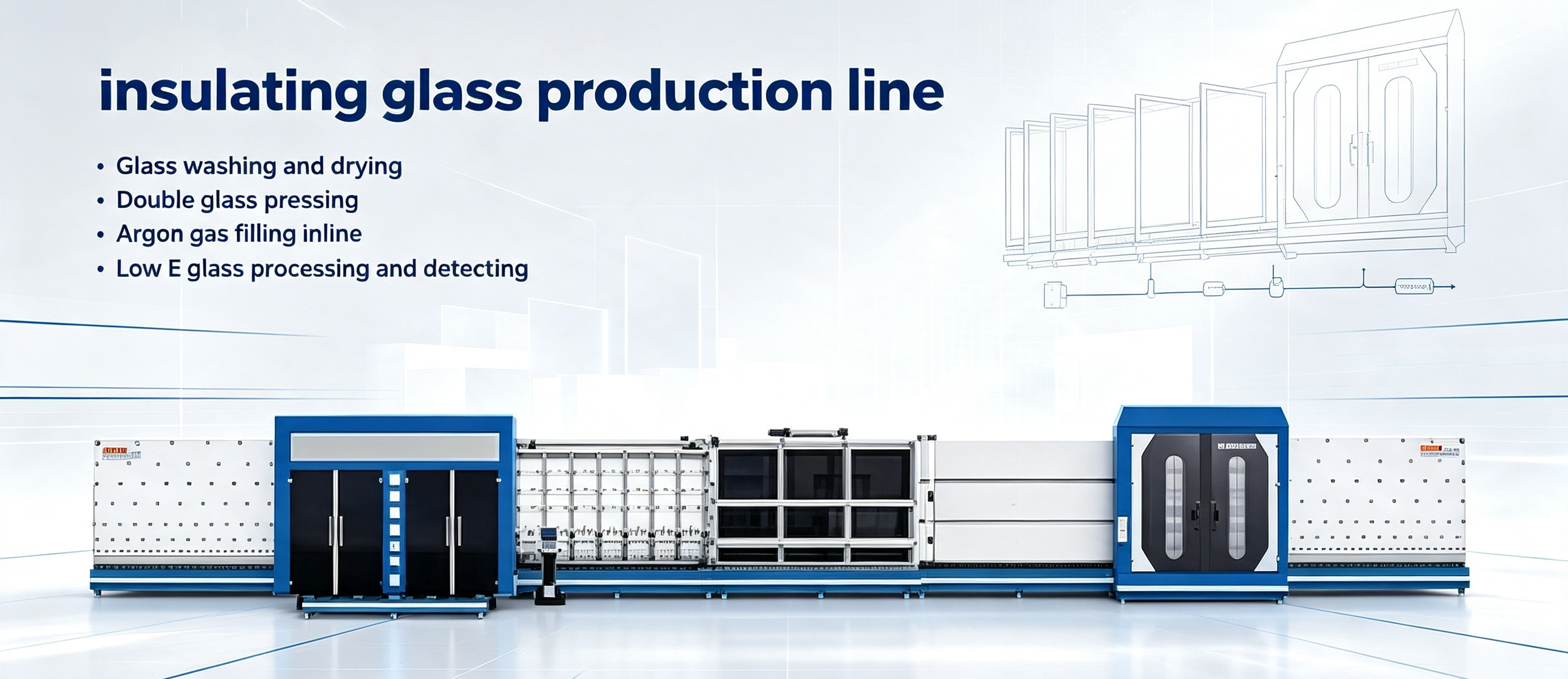
Caremach automatic insulating glass production line is integrated complete equipment for mass insulated glass manufacturing, combining high-speed glass washing dryer, auto glass assembling press, inline argon filling unit and automatic sealing station.
We provide flexible customized layout: match optional auxiliary machines according to your factory output, glass size and production process, one-stop solution for IG glass factory.
Suitable for architectural hollow glass, door & window insulating glass, curtain wall double glazing processing.
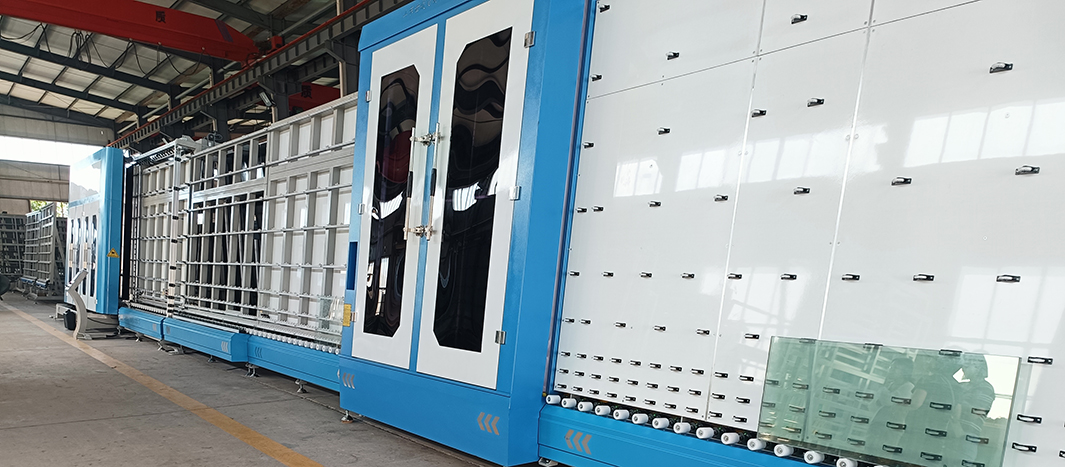
Standard Equipped:Glass Washing & Drying Machine + Automatic Plate Press Machine + Inline Argon Filling System
Optional Auxiliary Machines:Glass Cutting Machine, Glass Edge Polisher, Glass Lifter, Spacer Bending Machine, Automatic Sealant Extruder, Secondary Sealant Spreading Machine
Core Performance & Structural Advantages
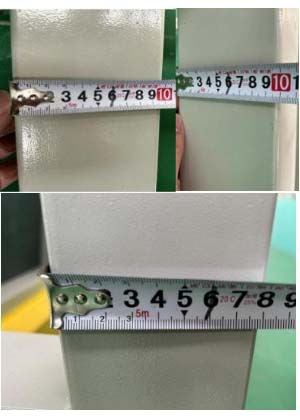
5 mm thickness steel tube, size 100x100mm, and 80x80mm strong machine frame.
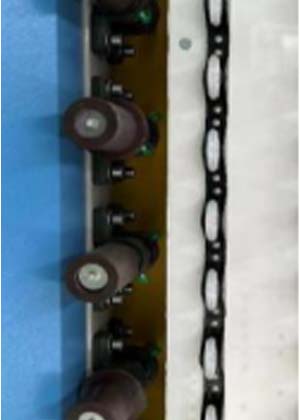
Strong conveyor wheel and bears
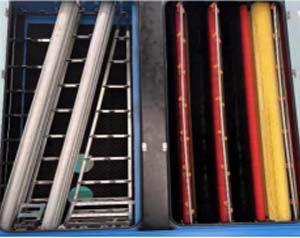
Washing part, 4 pairs of brushes, 2 pairs of air knives to make glass more clean.
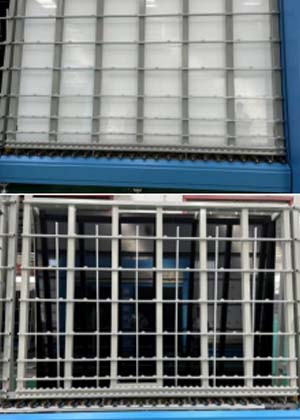
The third, fourth and fifth sections made with industrial aluminum profiles to ensure stable working
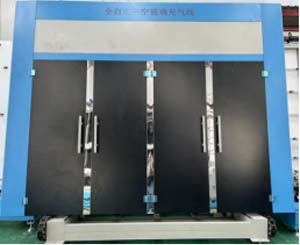
Air filling inline pressing part can ensure the argon content above 90%.
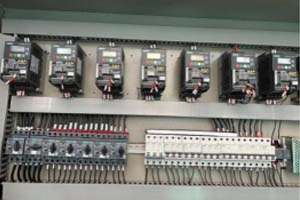
SIEMENS PLC and electrical parts improve working efficiency and long service life.
Inline Argon Gas Filling System
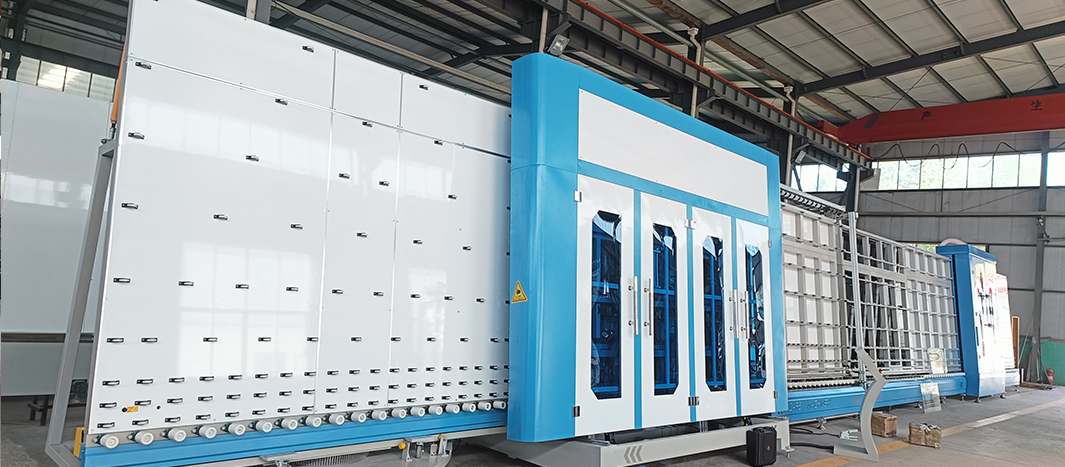
This integrated argon filling unit is the competitive highlight of our insulating glass line, fully servo synchronized without secondary manual inflation:
Servo synchronous pressing & unfolding, four-corner simultaneous clamping
Servo automatic side sealing to prevent argon leakage
Auto scan & measure glass width & height before inflation
Bottom-to-top inflation mode, fully discharge air inside cavity
Adjustable inflation time & pressure, auto control air volume
Auto switch inflation valves based on glass width to avoid argon waste
Real-time inflation volume digital display
Final argon concentration ≥95%, meet European energy-saving glass standard
Technical Parameters
Parameters |
|||
|---|---|---|---|
Power supply |
380V 50Hz 3P |
380V 50Hz 3P |
|
Total power |
30KW |
35KW |
|
Process glass scale |
Max glass sheet |
2000×3000mm |
2500×3500mm |
Min glass sheet |
280×480mm |
280×480mm |
|
Original glass thickness |
3-30mm |
3-30mm |
|
IG glass sheet thickness |
6-60mm |
6-60mm |
|
Insulation thickness |
6-24mm |
6-24mm |
|
Glass transmission speed |
0-50m/min |
0-50m/min |
|
Dimension |
L×W×H (mm) |
22700x2500x3000 |
26200x2500x3500 |
Application Fields
How to Choose an Insulating Glass Production Line: A Practical Buyer’s GuideChoosing an insulating glass production line is one of the larger capital decisions a glass processing factory makes. Unlike a single machine, an IGU line is a production system — washing, assembly, gas filling, pressing, and sealing all have to work together. Get the configuration right, and your cost per square meter drops while output climbs. Get it wrong, and you’re stuck with a line that either bottlenecks at one station or sits idle half the time.This guide walks through the decisions that actually matter, in the order you should make them.
Step 1: Define Your Output Before You Look at Machines
Most buyers start by comparing machine specs. That’s backwards. The line should be sized to your production reality, not the other way around.
Answer these four questions first:
How many square meters of IGU do you produce per shift — today and in three years? A line sized for your current volume may become a bottleneck if you’re growing. A line sized for projected volume may sit underutilized if growth is slow.
What’s your dominant product mix? Standard double glazing for windows and doors has different demands than triple-glazed passive house units or large-format curtain wall panels.
What’s your maximum glass sheet size? If you regularly handle jumbo sheets, a line rated for 2000×3000mm won’t cut it — you’ll need the 2500×3500mm class.
How many operators can you realistically staff? Automation level should match your labor situation. A fully automatic line needs fewer people but requires more skilled maintenance.
These answers determine which class of equipment you should even be looking at.
Step 2: Understand What “Automatic” Actually Means
The term “automatic insulating glass production line” covers a wide range. At minimum, a complete line includes:
Standard stations:
Glass washing and drying machine — cleanliness directly affects sealant adhesion and unit lifespan
Automatic assembly press — positions the spacer frame and presses the two glass panes together
Inline argon gas filling — displaces air in the cavity with argon to improve thermal performance
Automatic sealing station — applies the secondary sealant that holds the unit together and blocks moisture
Optional auxiliary machines that may or may not be integrated:
Glass cutting machine
Glass edge polisher
Spacer bending machine
Automatic sealant extruder
Secondary sealant spreading machine
The key question isn’t “how many stations” but “how much manual handling happens between stations?” Every manual transfer adds labor cost, handling risk (breakage, contamination), and time. A true inline line moves glass automatically from washing through sealing. A semi-automatic setup may require operators to move glass between two or three of the stages.
For factories running consistent volume, the labor savings from full inline automation often justify the higher purchase price. For low-volume or highly varied production, a semi-automatic configuration may be the smarter investment.
Step 3: Look Hard at the Argon Filling System
Argon filling is where many IGU lines quietly fall short — and where the difference shows up in your energy performance ratings.
Argon concentration determines the thermal insulation value of the unit. A line that fills to 85% argon produces a noticeably worse U-value than one that consistently achieves 95% or higher. For projects targeting European energy-saving standards or passive house certification, this is not a minor detail.
What to check in an argon filling system:
Is it fully servo-synchronized, or does it require manual intervention? Manual top-up after pressing is slow and inconsistent.
How does it handle air discharge? Filling from bottom to top and fully evacuating the cavity before inflation produces higher, more consistent concentrations than simply injecting gas.
Does it adjust inflation volume based on glass size? A system that uses the same gas volume for a small window and a large curtain wall panel is wasting argon — or under-filling.
Is there real-time measurement? A digital display of inflation volume lets operators verify performance without destructive testing.
Can it reach ≥95% concentration reliably? Ask for test data, not just a spec claim.
This single subsystem often separates a line that meets energy code requirements from one that struggles to.
Step 4: Evaluate the Frame and Mechanical Build
Spec sheets rarely emphasize structural build quality, but it determines how long the line holds precision — and how much maintenance it needs.
What to look for:
Frame material and wall thickness. Heavy-gauge steel tube (100×100mm and 80×80mm, for example) resists vibration and holds alignment better than lighter frames, especially in the washing and pressing sections where loads are highest.
Conveyor wheels and bearings. These are wear items. Stronger wheels and bearings mean fewer replacements and less unplanned downtime.
Washing section design. The number of brush pairs and air knives determines how clean and dry the glass exits. Four pairs of brushes and two pairs of air knives is a solid standard for architectural glass.
Section materials. Industrial aluminum profiles in the later sections provide stability without excessive weight. Stainless steel in wet areas resists corrosion.
Control system brand. SIEMENS PLC and electrical components are widely recognized for reliability and long service life — and, importantly, for parts availability when something does need replacing.
Step 5: Match the Line to Your Product Range
An IGU line’s technical parameters define what it can and cannot produce. The critical numbers:
Parameter What It Determines
Max glass sheet size Whether you can handle jumbo or oversized units
Min glass sheet size Whether you can produce small decorative or specialty units
Original glass thickness The range of glass you can feed in
IG glass sheet thickness The total unit thickness you can assemble
Insulation thickness The cavity width — affects thermal performance
Glass transmission speed Throughput and cycle time
A line rated for 3-30mm original glass and 6-24mm insulation thickness covers the vast majority of architectural and residential IGU production. If you’re producing triple-glazed units or specialty products outside these ranges, verify the line can be configured accordingly.
Step 6: Factor in Layout, Installation, and Support
An IGU line is large — often 22 to 26 meters long. Floor space, power supply (typically 380V 50Hz 3P), and material flow through your factory all need to be planned before delivery.
Questions to ask the manufacturer:
Can the layout be customized to your factory floor? A line that fits your space is worth more than one that requires rebuilding your workshop.
Is factory site measurement included? Reputable manufacturers will measure and design the layout before production.
What’s included in the shipping and installation support? Disassembly into modules, seaworthy packing, on-site installation guidance, and test videos should all be standard.
What documentation comes with the line? Machine drawings, operation manuals, and inspection reports matter for maintenance and compliance.
How fast is local service response? A good line with slow support is a liability.
Step 7: Choose a Manufacturer, Not Just a Machine
For a production line — as opposed to a single machine — the manufacturer relationship matters as much as the equipment.
What a strong manufacturer should offer:
Proven experience: 15+ years in glass machinery and exports to 40+ countries indicates the line has been tested across different production environments.
Certifications: CE certification is a baseline requirement for many markets.
Customization capability: OEM and ODM layout design, not just catalog configurations.
Comprehensive support: Factory inspection welcome, test videos, installation guidance, and clear documentation.
The manufacturer you choose will be your partner for spare parts, technical support, and upgrades for the life of the line.
A Practical Decision Framework
To summarize, evaluate IGU lines in this order:
Output and product mix → determines line class and size
Automation level → determines labor cost and consistency
Argon filling capability → determines energy performance and code compliance
Build quality → determines reliability and maintenance cost
Technical parameters → determines product range
Layout and support → determines installation success
Manufacturer reputation → determines long-term partnership
Buyers who work through these seven steps usually avoid the two most common mistakes: buying a line too small for their growth, or paying for automation they can’t keep busy.
Where to Go From Here
If you’re evaluating insulating glass production lines, the next step is to match your production profile against actual configurations.
Explore our automatic insulating glass production line → — integrating high-speed washing, automatic assembly pressing, inline argon filling, and automatic sealing, with argon concentration ≥95% and customizable layouts for architectural, door and window, and curtain wall IGU production.
Or get in touch with our team to discuss which configuration fits your factory output, glass size, and production process. We’ll give you a straight answer on what fits — and what doesn’t.
Factory Service & Support
Factory Strength: 15+ years glass machinery manufacturer, CE certified, export to 40+ countries
Custom Service: OEM & ODM layout design, factory site measurement, technical installation guide Supporting
Documents: Machine drawing, operation manual, test video, factory inspection welcome
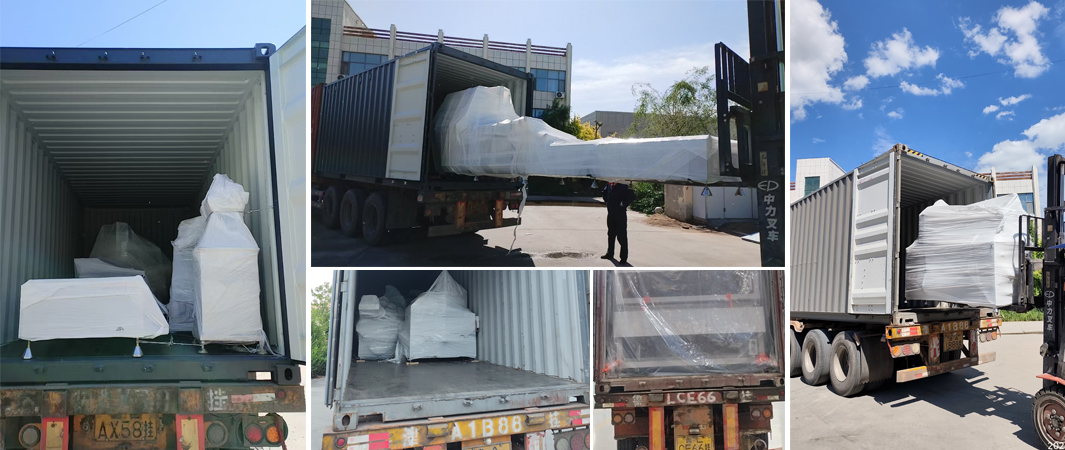
The insulating glass production line will be disassembled into multiple modules and packed with seaworthy plywood cases for ocean transportation, effectively preventing collision, moisture and rust during long‑distance sea shipment.
Large‑size frames are wrapped with waterproof plastic film and steel reinforced for fixing; all spare parts are separately boxed with clear marks for easy unloading, customs clearance and reassembly at customer’s site.
video
message
Get In Touch With Us
to be the “Solution Expert of Window Glass Processing Machinery!”
